
Exeter groups can bid for up to £2,500 by 13 October. Last year 19 of the 33 winners got less than they asked for, and only 4 of 15 got the full amount.
Exeter community groups have until Tuesday 13 October to apply for a City Grant, and £40,310 is left in the pot. Round two opened on 14 September. Grants of up to £2,500 are available, and the panel that decides them meets on 27 October. (Exeter City Council, 17 September 2026)
Updated 30 September: the council is running a free Community Grants Workshop on Monday 19 October, 6.45pm to 8.30pm, at Hobnob Hall, The Beacon Community Centre. It covers match funding, budgets and evidence of community support, with time to work on an application. It falls after this round closes, so it is most useful for round three. Places are booked through Eventbrite; questions to grants@exeter.gov.uk.
The fund is £60,000 for the year. Round one used £19,690 of it, which is why £40,310 remains for this round and the one after.
Worth knowing before you spend an evening on the form: applying for £2,500 and getting £2,500 is the exception, not the rule. Last year the council awarded City Grants to 33 projects. Fifteen of them asked for the maximum. Four got it.
What the money is for
The council says the fund supports “events, festivals and projects that aim to encourage community participation”. It will also pay for a one-off purchase or repair of equipment, which is the part groups most often miss: a new PA, a replacement kiln, a minibus repair all count.
To be considered you need:
- at least 20% match funding already in place, which on a full £2,500 bid means £500 of your own money
- evidence of community support for the project
- a project that meets one of the council’s key priority themes
The council is explicit that there is “no guarantee that an applicant will receive the full funding amount applied for”. (Exeter City Grants, Exeter City Council)
Eleven neighbourhoods come first
The council names eleven priority neighbourhoods, on the grounds that they are “the main communities in the city with the highest rate of inequalities”:
- Exwick
- Redhills
- St Thomas
- St David’s
- City Centre
- Newtown
- Mincinglake
- Beacon Heath
- Whipton
- Wonford
- Countess Wear
A project outside those areas is not barred, but Councillor Liz Pole, the lead councillor for communities, said she “particularly encourages” groups in the priority neighbourhoods to apply before the deadline.
What actually got funded last year
The council publishes the full list of awards, with what each group asked for and what it got. It is the most useful document in the whole process, and it does not appear in the press release.
Across the three rounds of 2025/26, groups asked for £69,162 and the council awarded £50,000. That is 72p in the pound. Fourteen of the 33 projects were paid in full. Nineteen were given less than they applied for.
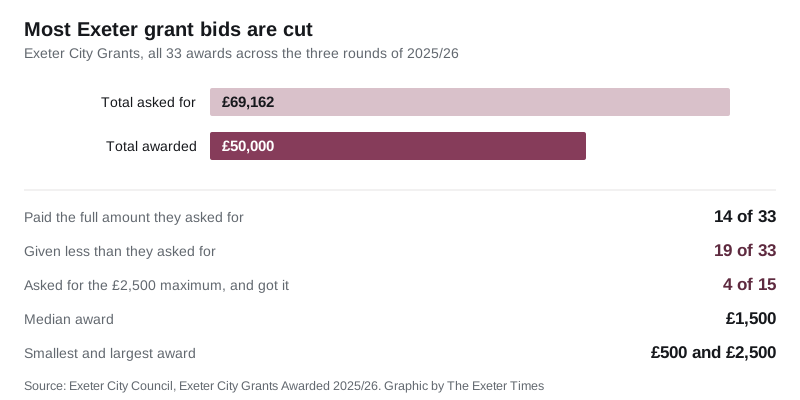
The median award was £1,500. The smallest was £500 and only four projects received the full £2,500: Exeter Otters wheelchair basketball club, Home-Start Exeter, East and Mid Devon, Exeter Community Initiatives and Exeter Pride.
The range of what wins is wide. The 2025/26 list includes a wheelchair basketball club running open Saturday sessions, Exeter Historic Buildings Trust, Exeter Hindu Cultural Centre, the Exeter Library music-making hub, Exeter Seed Bank, Sylvania Community Stores and Cafe, Wonford Health Matters and Citizens Advice Exeter. Several are arts organisations, several are health and advice services, and several are neither.
Two of them have already turned up in our own pages. Fabian’s Film Community Interest Company was given £1,200 in round one, and the work it paid for has become a play about Frederick Douglass’s 1846 visit to Exeter, running at the Cygnet Theatre on 1 and 2 October. Exeter Otters’ £2,500 was the largest award of that round. (Exeter City Grants Awarded 2025/26, PDF)
What it means for you
If you run a group and you are thinking about it, the deadline is Tuesday 13 October. The panel meets on 27 October, so a decision should follow within a fortnight of the closing date.
Ask for what the project actually needs, and cost it properly. Of the fifteen bids at the £2,500 ceiling last year, four were paid in full and the other eleven were cut to somewhere between £990 and £2,000. Smaller bids did a little better, but not much: of the nine bids under £2,000, four were paid in full. A cut to roughly half the ask was the single most common outcome, so plan for a project that still works on less.
Get the match funding sorted first. The 20% is a condition, not a preference, and on a £2,500 bid it is £500 in cash.
If you miss this round there is one more. Round three opens on 6 January 2027 and closes on 28 January 2027, with a panel on 10 February. The council describes all of these as provisional dates that may change.
The application form is on the council’s own site, and a separate Exeter Ward Grants scheme runs alongside it for smaller, ward-level projects.
Sources
- “Community groups invited to apply for City Grant funding”, Exeter City Council, 17 September 2026 for the £40,310 remaining, the 13 October deadline, the £60,000 budget and Councillor Pole’s quoted words.
- Exeter City Grants, Exeter City Council for the £2,500 maximum, the 20% match funding requirement, the eleven priority neighbourhoods, the round two and round three dates and the panel meeting dates. Page last updated 14 September 2026.
- Exeter City Grants Awarded 2025/26, Exeter City Council (PDF) for all 33 awards, the amount each group applied for and the amount awarded. The totals, the median and the counts in this article are our own calculations from that list.
- “Story of slave abolitionist’s visit to Exeter comes to the stage”, Exeter City Council, 18 September 2026 for the Fabian’s Film grant and the Cygnet Theatre dates.
Have your say