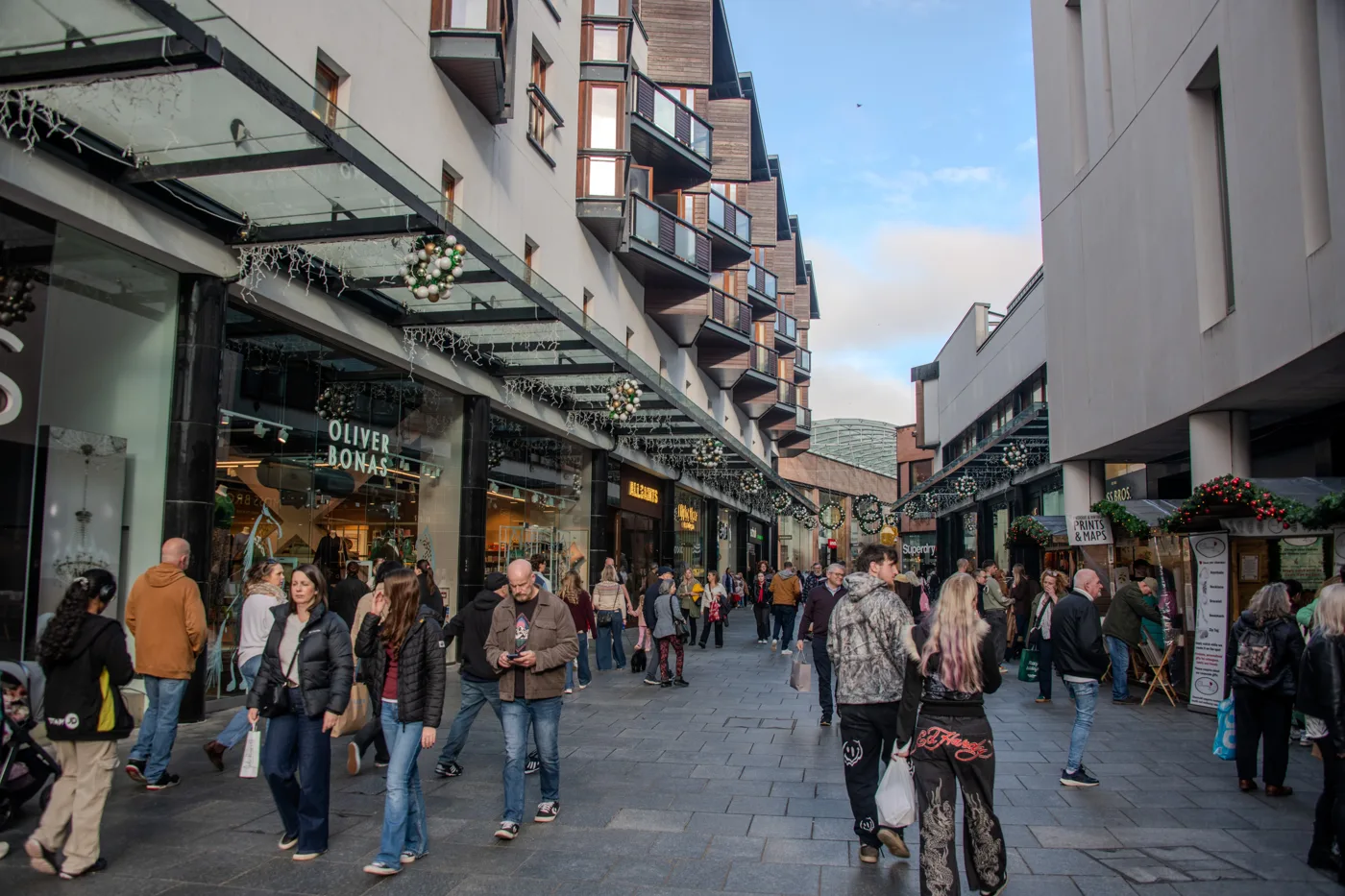

Exeter's five-year city centre strategy goes to full Council on 1 December. Tackling anti-social behaviour came top with 340 consultation respondents.
Exeter’s plan for its city centre over the next five years has cleared the council’s Executive. It now goes to a meeting of the full Council on Tuesday 1 December for adoption.
The Exeter City Centre Strategy 2026 to 2031 was shaped by a public consultation. Its clearest message was that people want the centre to feel safer. Reducing anti-social behaviour ranked first of all the actions put to respondents, and by a wide margin.
The council’s news release of 30 September announced the Executive’s vote. The detail below comes from the officers’ report in the Executive papers for 29 September and the strategy document itself.
What residents said
The online consultation ran from 18 May to 29 June 2026 and drew 340 responses. The report says 84.5% of respondents (287 people) live in Exeter and 92.4% answered as individuals rather than businesses.
84.7% agreed or strongly agreed with the strategy’s vision.
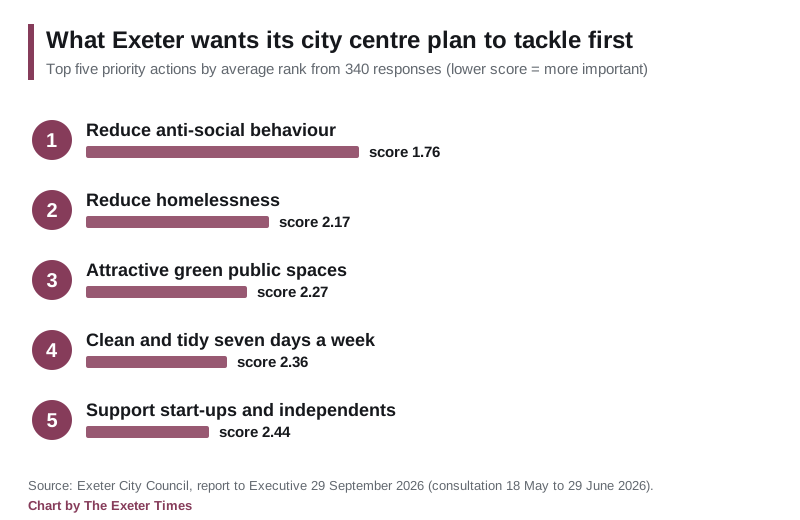
Respondents ranked the priority actions under each theme. The report gives the ten with the best average rank, where a lower score means more important:
| Rank | Priority action | Score |
|---|---|---|
| 1 | Reduce city-centre anti-social behaviour, working with police and support agencies | 1.76 |
| 2 | A joined-up approach to reducing homelessness in the city centre | 2.17 |
| 3 | Public spaces that make an attractive green city centre | 2.27 |
| 4 | Keep the city centre clean and tidy seven days a week | 2.36 |
| 5 | Make the centre viable for start-ups, independents and microbusinesses | 2.44 |
| 6 | Cut vacancy rates by using empty shops for “meanwhile” uses and creative industries | 2.54 |
| 7 | Make parks and open spaces safe and accessible for all | 2.58 |
| 8 | Make space for nature in existing spaces and new developments | 2.70 |
| 9 | Better, more affordable bus and train links into and within Exeter | 2.78 |
| 10 | Support events and festivals throughout the year | 2.82 |
The report breaks the answers down by age. Respondents aged 35 to 54 cared most about safety, cleanliness, public spaces, public transport and anti-social behaviour. Under-35s leaned towards culture, family activities and things for young people. Over-55s put public transport, cleanliness and access to the centre high on their lists.
The strategy document quotes residents beside its vision. One quote reads: “More police presence and better CCTV / lighting.”
Among the written submissions, 22 came from residents of Duryard and St James ward. They were worried that the strategy’s map took in St James, a residential area. The council says it has redrawn the map and added detail on existing planning policy in response.
What the strategy says it will do
The strategy has six themes, now placed in the order respondents ranked them:
- Safety, accessibility and wellbeing
- Appearance and cleanliness
- Connectivity of the city centre
- Daytime and night-time economy
- City centre living
- Destination offer
The “city centre” means everywhere within a 15-minute walk of Exeter Cathedral, according to the strategy’s map.
Under the safety theme, the priority actions include:
- reducing anti-social behaviour through partnership with police and support agencies
- “diversified and improved” street lighting and CCTV
- safer parks and open spaces, with more seating, street art and play equipment
- reviewing and enforcing the Clear Streets Charter so the centre is easier to get round for people with limited mobility
Each action comes with a “measure of success”. For anti-social behaviour, the measure is simply “Reductions in Anti-Social Behaviour incidents in the city centre”. For empty shops, it is that the city centre vacancy rate stays below the national average.
What it does not do
The report is plain about the limits. It says the strategy is a non-statutory document and “not a planning policy document”. It does not change the Local Plan.
Adopting it does not “in itself authorise expenditure or operational decisions”. The council’s finance officer says there are no financial implications. The strategy itself says delivery depends on “external grant funding” and on partners.
The specifics are left to a City Centre Action Plan, to be written during autumn 2026. That plan is meant to set out each project, who leads it, the timescale, the funding and how progress will be measured. A new City Centre Partnership Group of council heads of service and outside partners will oversee it.
Exeter City Council is due to be replaced by a new unitary council. The report says the pause in local government reorganisation makes the timing “uncertain”. It presents the strategy as a foundation the new authority can inherit. We covered the pause here.
How anti-social behaviour looks in the police figures
Police.uk street-level data gives a sense of the starting point. We counted 1,318 anti-social behaviour reports within a mile of central Exeter in the 12 months to August 2026, down 16% from 1,570 in the year before. Our August crime figures report has the full breakdown.
A falling count does not mean the problem has eased in the way residents experience it. It is still the action they ranked highest, by some distance.
What it means for you
- The strategy is not yet adopted. Full Council takes the final vote on Tuesday 1 December.
- Nothing changes on the street yet. No new money, CCTV or lighting comes with adoption. Watch for the Action Plan, which is where projects and budgets will appear.
- You can still take part. The report says 53.5% of respondents asked to stay involved, and that this will feed into the new partnership group. The consultation materials and redacted written submissions are on the council’s engagement page.
- Coming into town? Our guide to parking in Exeter has current car park tariffs and the free park and ride sites.
Have your say